Critique of "Virtual Eyes" of Jaguar Land Rover
According to statistics from the American Automobile Association, as many as 77% of Americans do not trust the safety of self-driving cars. This number seems to have deteriorated, especially after several fatal accidents in the near future. Public opinion now generally believes that it is more difficult to overcome the psychological barriers to autonomous driving technology than to overcome its legal obstacles - BMW Schwarzenbauer, chairman of the BMW Board of Directors, discussed this in an interview last year.
In order to overcome people's psychological barriers, major automakers and technology companies have also tried a variety of programs, such as the development of autonomous vehicles that can talk to nearby pedestrians, and even "smile with a smile" to indicate that they can pass through.
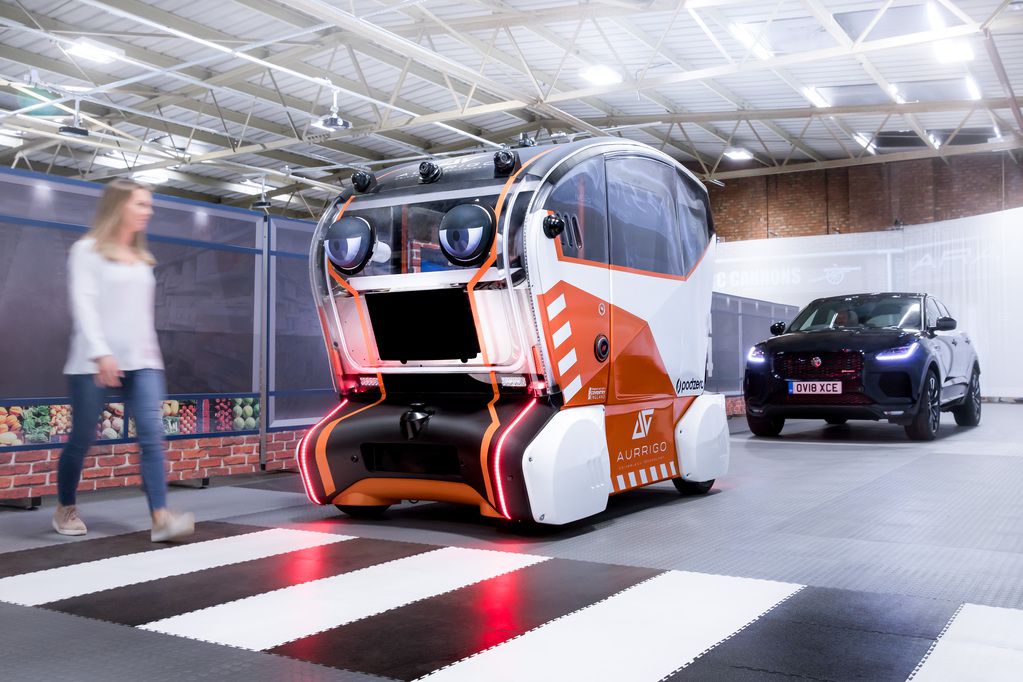
Recently, Jaguar Land Rover's engineering team worked with cognitive scientists to develop another solution: put a pair of big "eyes" on the front of the vehicle prototype to make eye contact with pedestrians which seems a bit stupid, but effective.
The "Virtual Eyes" serves as an information touch point, like turn signal lights and taillights, but it is more vivid and humanized. The "Virtual Eyes" design, basically, is an analog of the daily scenes where pedestrians would double check whether they are safe to pass through the cars by judging the drivers' physical language, especially their eyes. With the "Virtual Eyes", pedestrians would know that they are successfully detected and perceived by the self-drive car. To this extent, it is an excellent attempt in human-car interaction field. Humanization and affective computing can make technologies and devices better understood not by users but also other people involved in the product system.
Although it seems to be a perfect solution in a lab environment, it has some physical constraint in the real traffic scenes. It is a common scene that many pedestrians cross the road at the same time. However, the "Virtual Eyes" could only gaze at only one pedestrian and under this circumstance, the other pedestrians may feel anxious because they are not sure whether they have been detected by the car.
In short, it is an awesome concept design, which would lead more attempts in external human-car interaction in the autonomous driving era.